Screw Conveyors


SCREW CONVEYORS
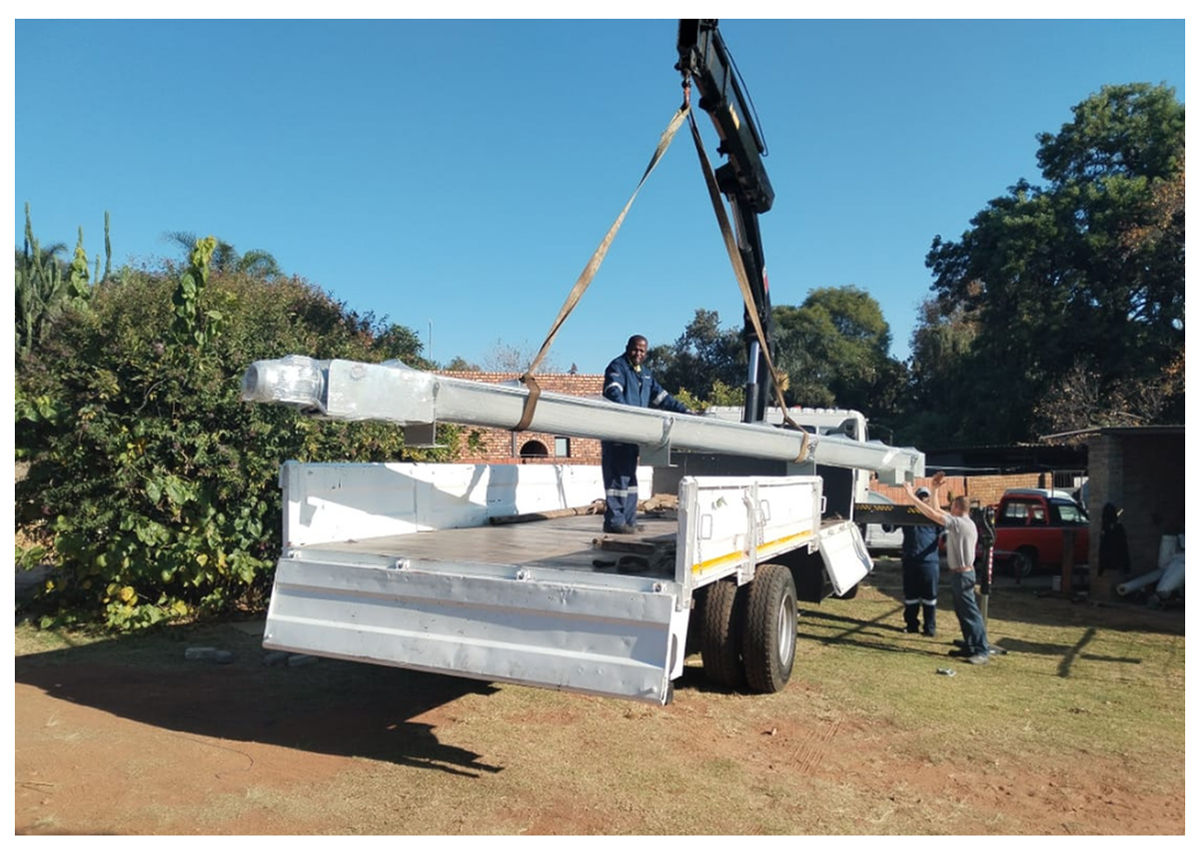
Mech-Tem screw conveyors are constructed as robust, reliable and durable.
They are a cost-effective means of transporting products.
Screw conveyors are typically used for the bulk handling of free-flowing products such as grain, cereals, feed, woodchips, powders, sand and cement.
Screw conveyors can also be used to move non-free flowing material. Screw conveyors are used to effectively move product in large volumes quantities and can be used to convey material horizontally, at an incline or decline or even vertically. This versatility makes screw conveyors one of the most reliable methods of product conveyance.
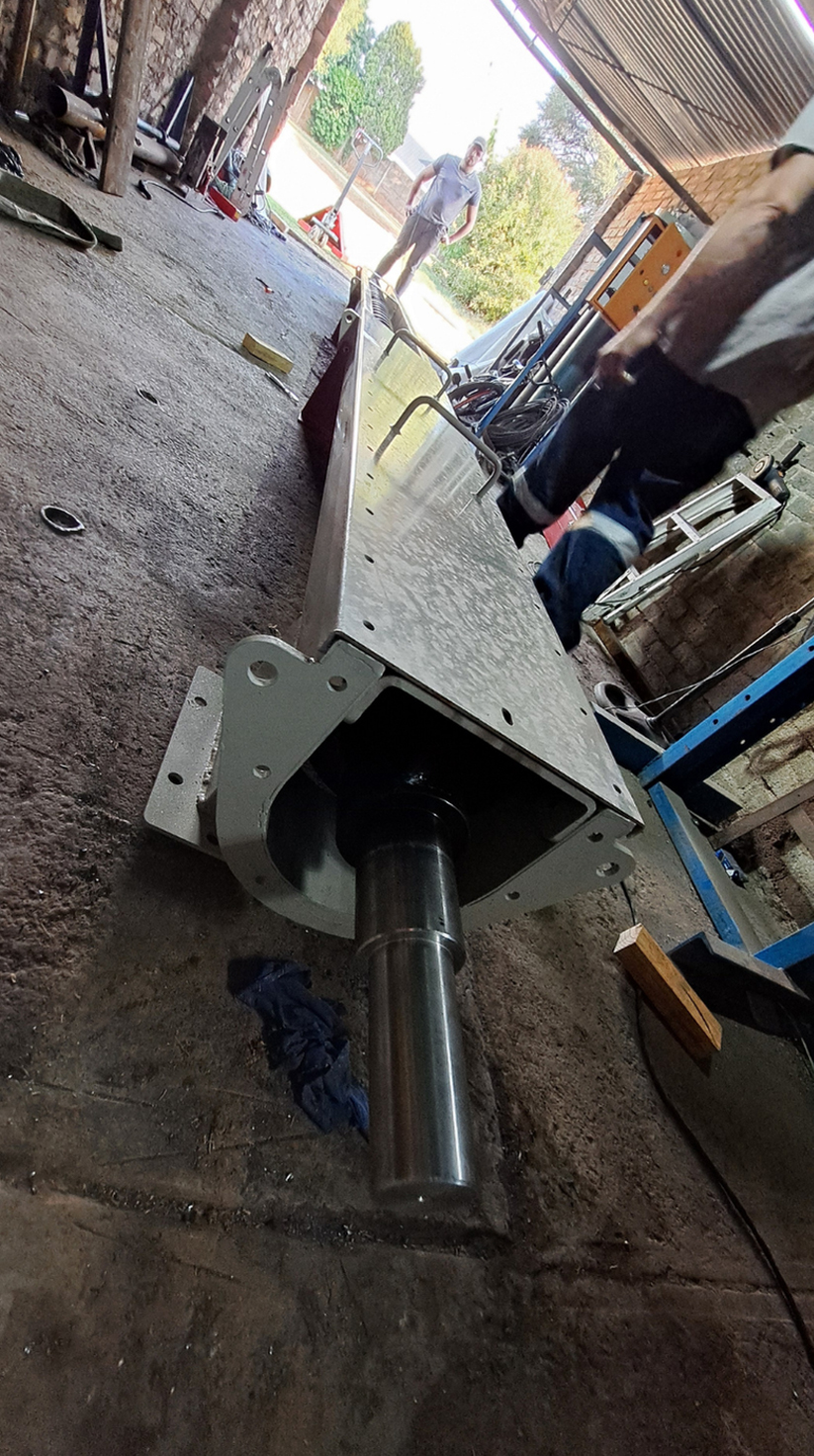
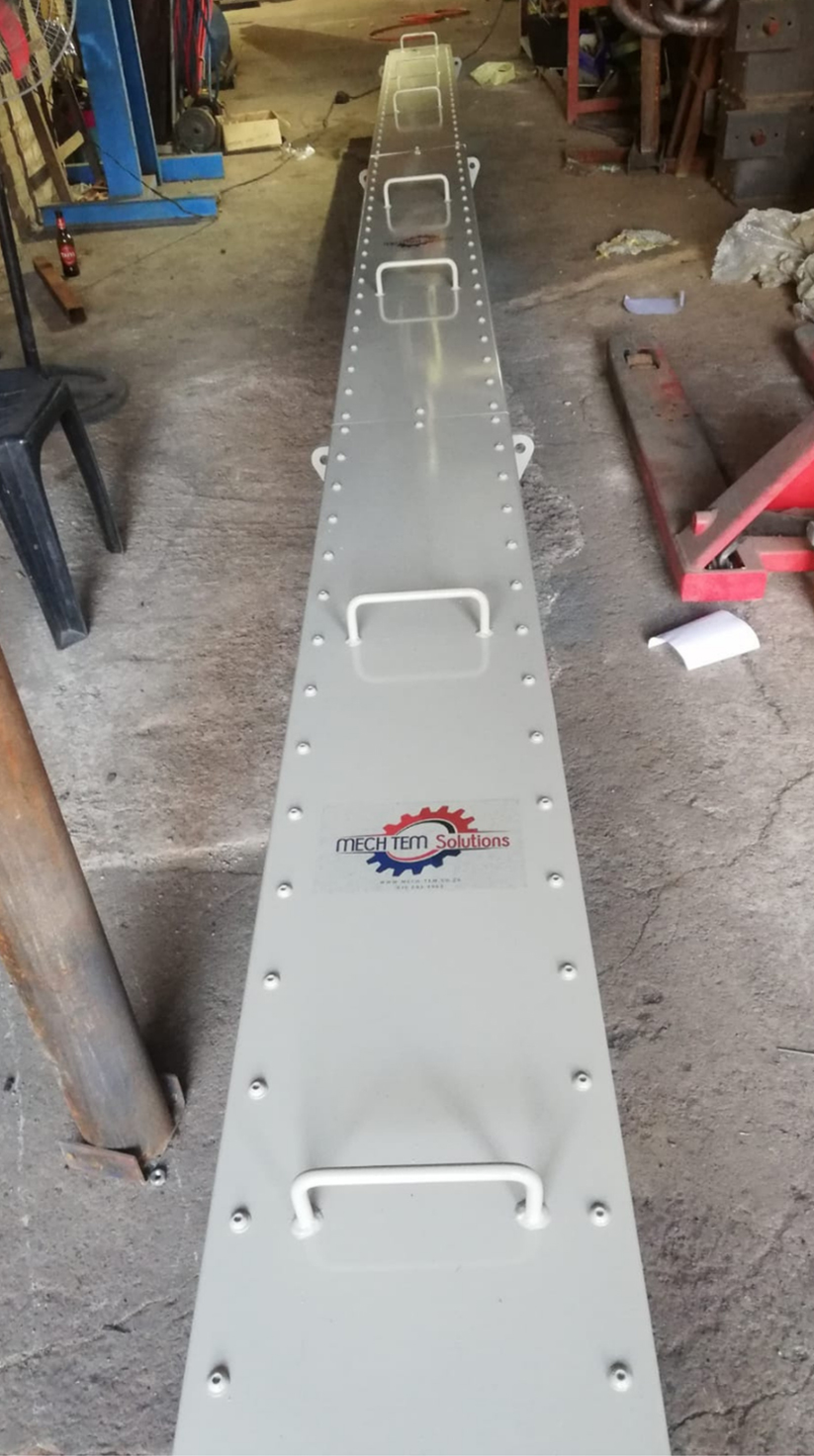
We supply screw conveyors in mild steel or stainless steel, in a wide range of sizes, lengths and configurations. The two most common types of screw conveyors are tube and trough conveyors.
We design our screw conveyors in up to 6m for through conveyors and up to 9m as tube conveyors. Longer conveyors are optional for certain materials. We avoid hanger bearings for most materials as they reduce the operational live between services considerable. We recommend for length longer than 6m for through (9m for tube conveyors) a back pack configuration (first screw conveyor feeds into the second).
SCREW CONVEYORS GALLERY

WHAT ARE SCREW CONVEYORS?
The Inception of Screw Conveyors :
Archimedes designed the first screw conveyor in the 3rd century BC. C. It was used to remove water from boats and to irrigate farmland. The device consisted of a hollow cylinder with a central axis and a screw attached to the inner wall of the cylinder and the central axis.
Operating Principle of a Screw Conveyor:
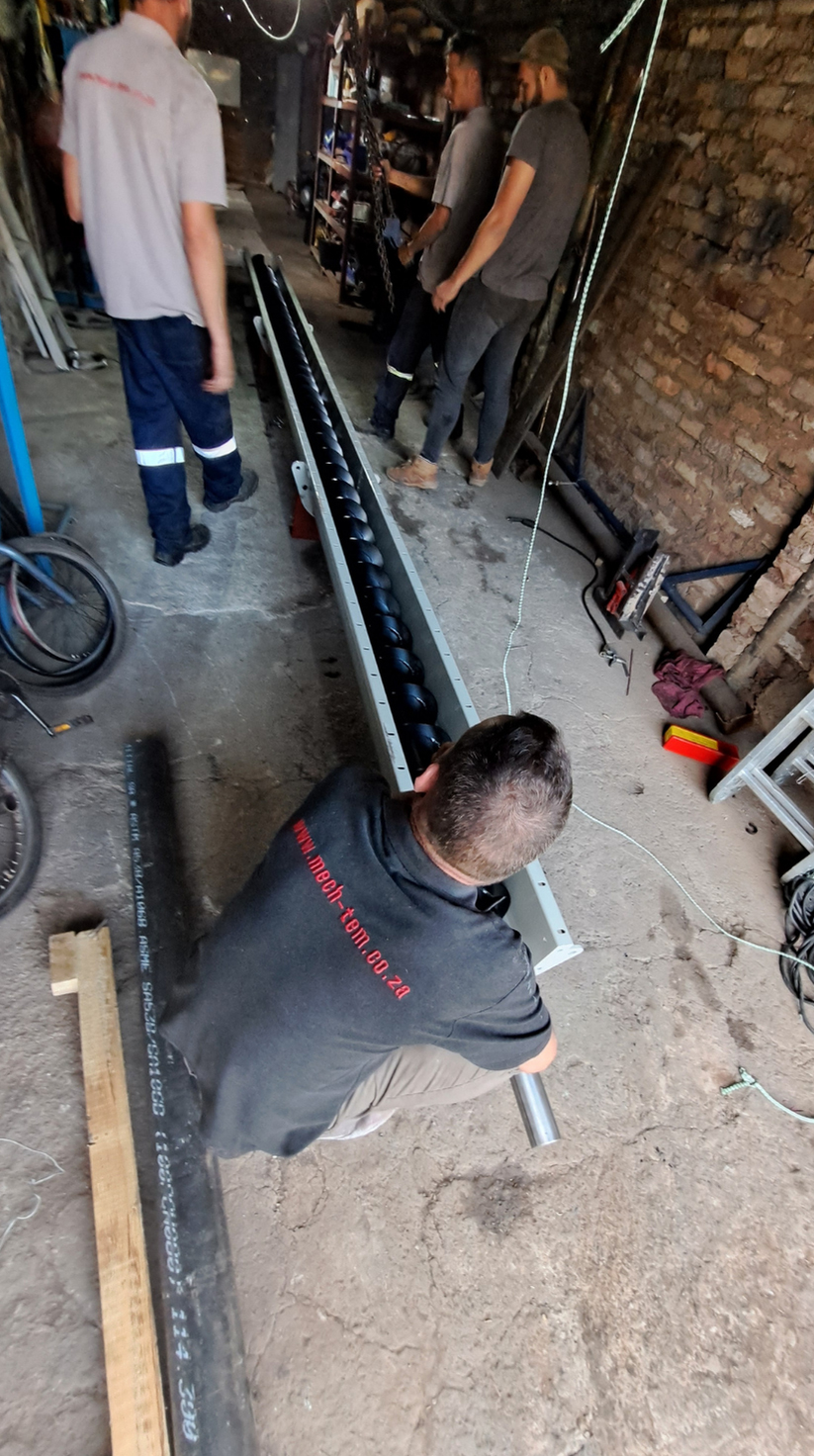
Materials (liquid or solid state) are loaded into the conveyor and pushed along by a helical screw blade (‘flighting’) mounted onto a rotating shaft. Materials remain entrained between the screw blade and casing until the point of discharge is reached.
What is a screw conveyor also known as?
A Screw Conveyor, also known as an auger conveyor, is a mechanism used in bulk handling. It can transport fluids and grain through a shaft using a rotating helical screw. They are set up horizontally or at a slight incline and transport semi-solid materials.
What are the advantages of screw conveyors?
Screw conveyors are very compact and adaptable to congested locations. Screw conveyors do not have a return similar to a belt or drag conveyor. Screw conveyors are totally enclosed to contain the product and prevent spillage.
Screw Conceyor Working Principal :
As the screw rotates, the blade generates thrust, pushing the material to move reciprocally along the bottom of the conveyor. The material at the mid-axis point is pushed by the material from behind, while the non-rotating nut moves in the direction of the screw.